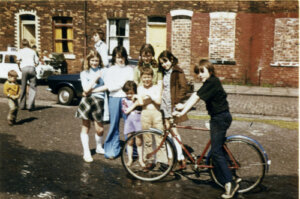
“I grew up in Belfield, Rochdale in the 1970s. I lived in a terrace house very similar to the ones in the image. This could easily be a photograph of me, my brother and my community.
We played out from dawn ’til dusk regardless of the weather and dressed in clothes handmade by our Mum or hand-me-downs from the older children next door. Our bikes were bought at Christmas from the second hand ‘under £2 ads’ in the Rochdale Observer. You might call them fixer-uppers. We would ride up and down the street, two or three on a bike, and make ramps from found bits of wood propped on bricks. On any given day there was a 50/50 chance of an injury from some daft idea or another.” Angela Tait, University of Salford.
“My mum, my brother and I moved to Salford in 1980 when I was 4 years old. This photograph brings vivid memories of my childhood, time spent outdoors much like this group of children on Watson Street. Summer holidays, sunny weekends and evenings spent out on the street carefree with our friends riding around on our second hand orange chopper bike. Siblings and friendship groups all together, the street, our playground. Brick walls were for climbing, the petals from rose bushes mixed in water to make perfume and mud mixed with water made thumb pots. Outside play only stopped if we were called back in for tea or if my brother ended up coming off the bike after trying to perform some kind of stunt in which one of our neighbours usually ended up bringing him and the bike home.” Cath Stanley, A Level Photography Teacher, Pendleton Sixth Form College
“I was initially surprised by how little young people have changed! In the photograph there is still the same mix of friendship, awkwardness and belonging that you see today, even if nowadays these friendships unfold through phones and social media rather than on residential streets. It is nice to see that, despite the developments in fashion and technology, simple things such as spending an afternoon with friends remain constant across time.” Ellie Ashfield-Hayes, Ordsall Hall
“I picked this photograph because it made me smile! I would have been thirteen when this was taken and the photograph instantly took me back to that time. It shows the children’s fashion of the 1970’s flared trousers, checked skirts, long white socks and messy hair! Memories of meeting friends to head off to the park or ‘hang out on the streets.’ A happy and carefree time ‘just be back in time for tea.’ Also memories of my terraced home with coal fire, water heater, and outside toilet in the back yard. I wonder – do the bricked up houses indicate the beginning of the inner city regeneration of the 1970’s/80’s and big changes?” Lyn Rigby
Also selected by Jacqui Pollock
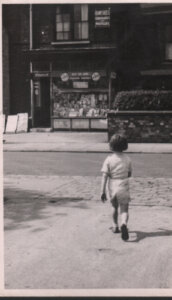
“There are lovely photographs, from the 1950s and earlier, of children on city streets, but this one really stands out for me. Instead of a small group looking at the camera, there is one girl with her back to us, walking away – but she’s a child on a mission. I love the way she’s striding out decisively as she heads across the road to the ice cream shop – she knows what she wants and she has set out to get it! It’s a hot sunny day and there may well be a group of friends just out of view but for this one captured moment she has an independence and sense of purpose that I love.” Claire Stewart, The Lowry
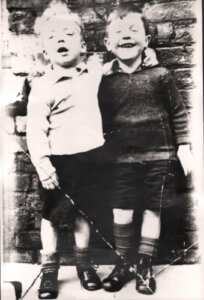
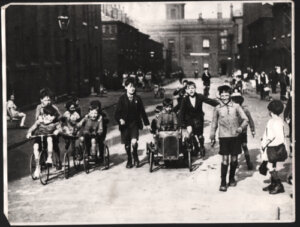
“I love this picture. Firstly, I was drawn to the cheekiness of the boys in the photograph. As a Mum of two boys it was definitely relatable. They certainly look like they have lots of fun together. You wonder what mischief they have been up to! You can tell they look like the best of pals as one of the boys has his arm around his friend. When I look at old photos, I often think, what’s their story? Despite this photo being nearly 100 years old, you can still imagine children playing like this today. I love that what ever might be going on in the world, the magic of childhood will always shine through.” Sarah Eckersley, Ordsall Hall
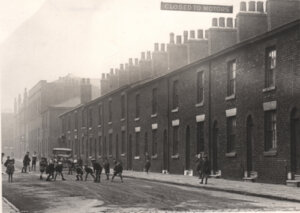
“I enjoyed finding this photograph because it speaks of freedom and childhood innocence. It’s not posed, a moment in time captured, the children unaware of it being taken. Freedom to play in the street, no motor cars which considering there were so few on the road compared with today, shows an identified need. I wonder why the photographer took it? To show this or an image of poverty? (Posh children wouldn’t be playing in the street!)
I find myself comparing life with today, the sense of community, children being children, using their own creativity and imagination to play together in a safe space. I would love to see a street today with no cars, no litter, harmless games being played by friends.” Pam Pickard, Art & Craft Tutor based in Monton.
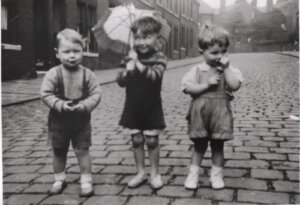
“Where We Stayed Young a Little Longer. Three young boys stand on a cobbled street, their faces bright with unfiltered happiness. Their clothes feel almost formal by today’s standards, yet their expressions resist that neatness, they’re young and carefree. One grips an umbrella like a small toy, while the other two seem distracted, but unmistakably caught in the moment of play. The black and white colour of the photograph draws attention to texture: worn brick, rough cobbles, the closeness of buildings leaning into shared space. It strips everything back, leaving connection at the centre of the image. There is something quietly moving here. Decades pass, streets change, but this moment holds. Brotherhood, or friendship, is shown clearly without colour, carried in shared moments and the simple act of being young together.” Astrid Booth, A Level Photography Student, Pendleton Sixth Form College
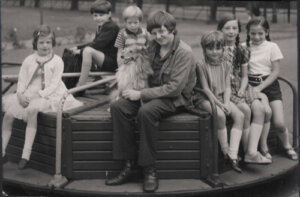
“I like the way the dog is the most photogenic one in this image. I wonder if it jumped off after the posed photograph was taken, when the kids started to play and spin the roundabout…” Dave, Salford Museum & Art Gallery
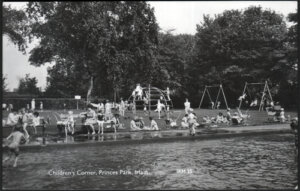
“With the paddling pool full of children, and the swings and Igloo in the background. This photo brings back memories of long hot summers and my sister and I coming home damp and full of sand.
Children’s corner is long gone now with the apparatus being modified and moving to a larger area in the 1970’s. This photo brings back memories of my early childhood and times that have now changed.
In the background of the photo is the wall that surrounded the kitchen garden of Irlam Hall. This is now Princes Park Garden Centre.” Deborah Yates, Friends of Salford Museums Association
“The Reds and Blue final 1929! The makeshift ball flew between the coats. Another goal for Charlie in Salford’s back street Final. 15 kids cheered. 15 groaned. PC Cole walked up and smiled. “Sorry kids, you can’t play here. It’s illegal.” Sadly, PC Cole was right. Salford’s busy back streets could be dangerous.
In 1929, however, Chief Constable Godfrey proposed closing some streets from traffic, allowing children to play. It proved successful. The Blackfriars area, Chapel St, Adelphi St, and Silk St were the first closed to traffic. 200 streets were deemed ‘Play Streets.’ In 1938, Leslie Belisha M.P. famed for ‘zebra crossings’ and ‘Belisha Beacons’ brought in the ‘The Street Playground Act.’ In 1963 there were 750 playground streets. A great first for Salford!” Bernie Shaw, Swinton Writers Group
“When I look at the photograph of Cleminson Street it reminds me of when my dad used to tell me stories of him growing up and playing with his friends in the street. He grew up in Hartlepool in the late 70’s and often reminisces on his childhood. His nan lived in the house over the street so he was always back and forth between the two. Everyone knew each other and looked out for everyone. He was in a class with 10 other kids who all got along well and played together in the street after school and during the summer. They would often kick a football up and down the street or play on their bikes.” Grace Pearson, A Level Photography Student, Pendleton Sixth Form College
“The streets of Salford were the domain of Salford kids and dogs. They chased us relentlessly, baring teeth and snapping at our ankles, this we navigated daily. The street was our training ground. We made swings on lampposts without hanging ourselves. We built dens without an architect. We made fires in our den, lit with matches we daringly stole from coat pockets and drawers at home, that showed adventure, courage and skill. We became firefighters, stamping fires out with the soles of our shoes. We made weapons from broken sticks, we chose leaders that made rules. We cared for the injured, after a battle with another gang, with a grubby handkerchief and a bit of spit. We were amateurs, becoming stronger daily. Learning life skills through play we became responsible and resourceful with no adults around to crush our ambitions. We weren’t the ‘Gangs of New York,’ or the ‘Jets and the Sharks,’ with knives, from West side story. We were resilient, regular Salford street kids, navigating our precious freedom most children of today don’t have…” Lil Rose Walford, Swinton Writers Group
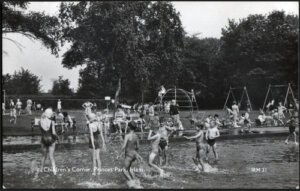
“The reason why I am selecting this particular photograph is that it will bring back happy carefree memories for 100s of people who lived in Irlam and Cadishead up until the paddling pool was drained in the 1970s. My own two sons paddled in it and played in the nearby sand pit which was filled in and grassed over in the 1970s also. The reasons for the closures of these two facilities was said to be Health and Safety.” Sean Kilgarriff, Irlam and Cadishead Local History Society
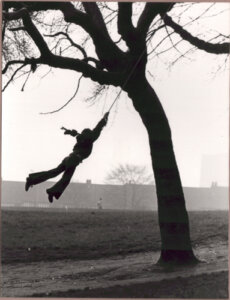
“I hope this child had the feeling of freedom this image gives me when I look at it. I think it’s the light and the solitary figure. Hopefully they were lost in their thoughts, not a care in the world just swinging away.” Carrie, Salford Museum & Art Gallery
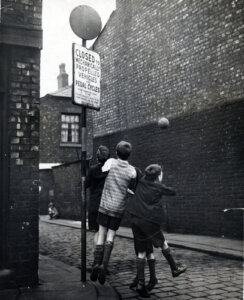
“I think this photograph perfectly captures the playful defiance of youth as they learn to create friendships, navigate life and their surroundings. The adoption of an on paper derelict street into a symbol of fun and play is a great representation of how children can stem joy from anywhere using their curiosity and imagination. The image pictures a group of boys with a common interest of football and from their positioning and angle of their heads you can tell they are all fascinated by the game and the fun they have found; it shows how something that can present as basic or even boring to adults like a street and a ball can have potential for hours of entertainment for children. As this was a common pass time activity I think it has an air of relatability and nostalgia that can be felt far further than in Salford and the appreciation for childhood play in unexpected circumstances can be felt everywhere. ” Ella Wynn, A Level Photography Student, Pendleton Sixth Form College
“Most of us will know the freedom of playing out in the street, somebody’s mam looking out of the window to keep an eye on everyone, debating who’s dad was more likely to give them coins for sweets. But a lot of people don’t know about Play Streets, and how a simple race or a game of rounders was an illegal offence with a hefty fine, and could land a child in jail! In a time of garden-less homes, I can only imagine the joy in this trio finally getting to safely play football in the only open space they could, the street.” Leo Rutledge (he/him)
“I resonate with this photograph because of the nostalgia I feel from memories of playing football with my friend group in high school, using anything we can to use as goalposts. I am reminded of the energy, the freedom and the carefree nature of childhood in my high school years. Looking at an old photograph makes me feel more nostalgic about memories as they feel like sentimental time capsules, which memories are, however positively or negatively we remember them. Playing football feels like a shared memory because of the passion for the sport I have, my family have and my friends still have.” Riley Higgins, A Level Photography Student, Pendleton Sixth Form College
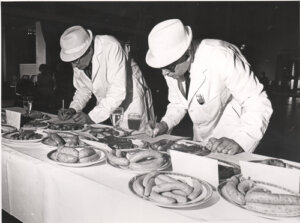
“I’m not sure what to say about it though other than I find it amusing/bizarre!” Peter Turner, Salford Local History Library
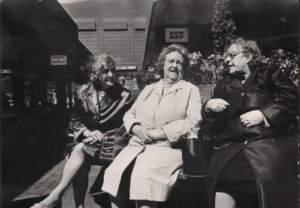
“This is a photograph of three older women sitting on a bench. In the background, there is an old Marks & Spencer sign and a New Day shop sign. They are sat in front of a large planter filled with different foliage and are all wearing button up coats.
The three women all have happy expressions. The woman on the right looks as though she is ‘spilling the tea’ while the other two look at her with amusement.
I chose this photo because I am one of three sisters. When we get older, I hope that distance and time do not get in the way of us having a good natter on a bench like these three women.” Eve Oliver, Salford Libraries
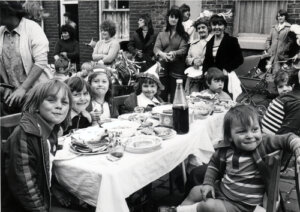
“I have chosen this photograph from a 1977 Jubilee street party because it captures a genuine sense of community and shared celebration. What stands out is how happy the children look – there is a natural unposed quality to their expressions that make the moment feel real and warm. For me, the photograph represents not just a celebration, but a strong sense of belonging, connection and everyday happiness within a neighbourhood, very much like the part of Salford I have lived in for the past 20yrs.” Jo Byrne, Salford Museum & Art Gallery
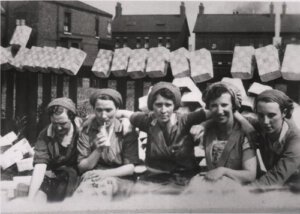
“It is a photo of five women working at the Besto Basket Company in Irlam taken in the 1960’s.
These baskets in the photo were developed as the first non-returnable baskets. Prior to these baskets fruit was sold in large baskets, sent back to the fruit growers and refilled. This caused problems with bacteria spreading. These new baskets were made of veneer. The ladies would slice wood into very thin slices which were weaved together. The machines used to cut the veneer were very sharp and it wasn’t unusual at the time for ladies to loose or damage their fingers.” Deborah Yates, Friends of Salford Museums Association
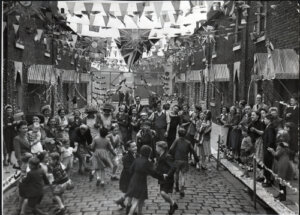
“This image evokes the sense of pride in a community, it doesn’t matter why this street got together to celebrate, All ages, no cares in the world, together. This neighbourhood knew each others names, families grew up together, lives were shared. You see it all here in their faces and how they are connected with each other. Society has lost so much of this sense of togetherness, this image makes me realise how disconnected we have become. Humans are meant to be connected, being part of something bigger than ourselves is meaningful. There is a quiet ache that settles into places where community once thrived.” Pam Pickard, Art & Craft Tutor based in Monton
“Immediately looking at this photo you can sense the joy and community of people coming together on their street. To me, this is the charm of terrace houses. While often overlooked as just a style house, they are such a uniquely British form of architecture that tells so many stories, like in this photo. We’re seeing people be outside on what looks like a nice day, laughing, having fun, and overall celebrating being together. Each face tells a story in this image, just as how I view the terrace houses, filled with so many generations and stories that often we don’t know and can be overlooked, but always providing togetherness.” Taylor Mitchell
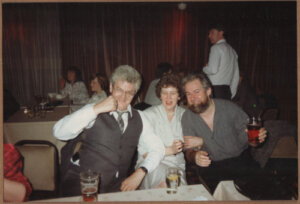
“My favourite part of our photograph collection are the ones which showcase past iterations of Salford Museum & Art Gallery, and in particular, it’s staff. It’s fun to think about all the people who worked here before me.
I love this candid photo, from a staff Christmas party, because of the silly joy it evokes, the fashion it documents and how it perfectly captures the fun of a good night out. I can confirm that our Christmas Parties are still like this.
Even better, this was in 1989 – the year I was born. It’s wild to think that I was just a baby in California and someday I’d be one of these staff members in Salford too!” Annie Love, Salford Museum & Art Gallery
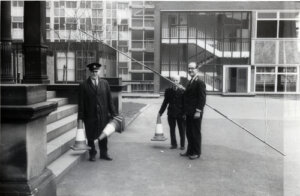
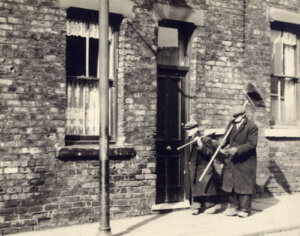
“I just love the randomness of this photo taken outside Salford Museum and Art Gallery. Three men moving traffic cones and one with a knocker-upper. It reminds me that no two days are the same working here!” Amy Brunn, Salford Museum & Art Gallery
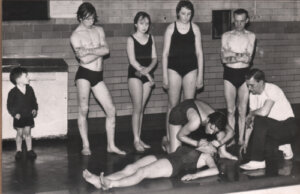
“This photograph of a life-saving class at Eccles Baths from 1967 reminds me that we were encouraged by our school and the Royal Life Saving Society to learn life saving and the Holger Nielsen method of resuscitation. We are fortunate that Eccles Baths has been re-purposed and still reminds us of the kind of swimming baths built in the early twentieth century. Most of these buildings have been demolished. I didn’t live in Eccles at this time but I swam at Cromwell Road Baths against Eccles ASC when towns competed against each other in the Bolton & District League. Eccles ASC has a proud history of teaching swimmers to success at regional, national and international level.” Judith Rose, Eccles & District History Society
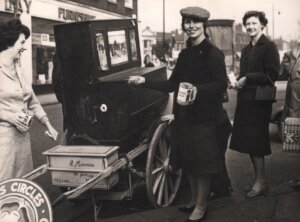
“This photograph shows charity collectors with a barrel organ sitting on a Marocca cart outside Eccles Open Market in October 1963. Marocca was an ice cream seller and he took the barrel organ around the streets when unable to sell ice cream in the winter. The barrel organ and cart are now in Salford Museum’s collections.” Peter Turner, Salford Local History Library
(Image credit Bielby)
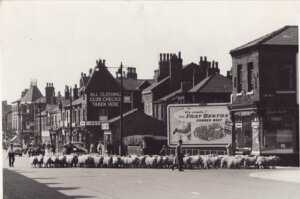
“We don’t know how this story unfolds given the sheep are crossing the street to the butchers, so I chose to think about how funny it must be to have seen the sheep cross the road instead. Where I grew up in Chicago, we didn’t have sheep. I’ve never interacted with so many sheep until I moved to England but they’re everywhere here. Often being overlooked at their services and the abundance of them. Anytime you go out into the countryside, you interact with sheep which is an unexpected cultural difference I learned quickly. I only ever saw them in a zoo or on farms!” Taylor Mitchell
(Image credit A. Battersby)
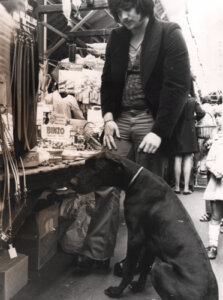
“I love the dog and the tight trousers!” Annie Love, Salford Museum & Art Gallery
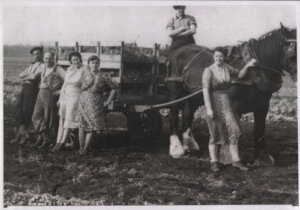
“Salford may be known as an urban, industrial place, but it has its share of rural spaces too, including the Chat Moss area to the west of the city. Chat Moss was home to a thriving farming community from the 19th century, growing amazing vegetables in the rich peat that were sold across the country. The moss lands of Irlam and Cadishead were designated as a National Nature Reserve in 2025 due to their biodiversity and carbon storage.
I love the sense of community endeavour in this photograph!” Naomi Lewis, Salford Museums & Galleries
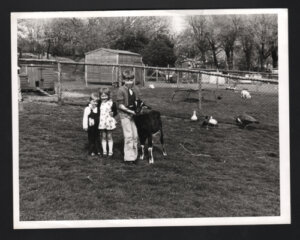
“I love visiting a pets corner especially if there’s a goat! I think the joy you can get from being able to interact with animals, especially at a young age, is magical!” Amy Brunn, Salford Museum & Art Gallery
(Image credit Mr Harry Wilkinson)
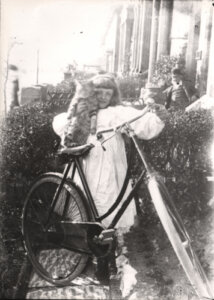
“I like to think that this girl wanted her two prized possessions in this photograph – her cat and her bike. I don’t know what it is about this image that makes me think of the artist Grayson Perry.” Carrie, Salford Museum & Art Gallery
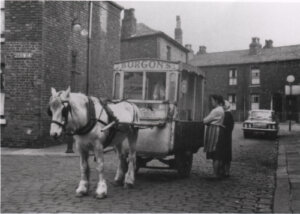
“Imagine the ice cream van coming round drawn by a horse. Two treats in one!” Carrie, Salford Museum & Art Gallery
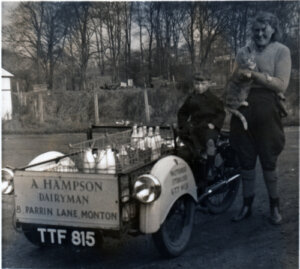
“Before electric milk trucks some dairies used specialised motorcycles to deliver milk to their customers. These pedal-powered three-wheelers were developed in the 1930s by the Dot Cycle and Motor Manufacturing Company which was initially established in Salford. I’m not sure who would be delivering the milk here; the boy, the woman or the cat!” Carrie, Salford Museum & Art Gallery
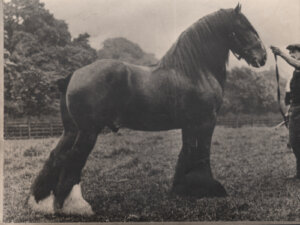
“I think Shire horses are magnificent animals and would have been used on farms and pulling barges on the canal. This is ‘Worsley King Albert’ who was a champion stud horse kept by the Third Earl of Ellesmere. Horses would have been seen so much more in people’s day to day lives. Being a horse lover myself, I wish this was still true!” Amy Brunn, Salford Museum & Art Gallery
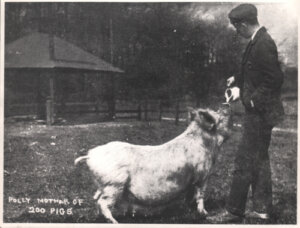
“I just love pigs!” Laura Daniels, Salford Museum & Art Gallery
Polly Pig belonging to the Cock Hotel Worsley – noted for drinking beer and being mother of over 200 piglets. Her grave stone says 1904 and still stands in the precincts of the present Cock Hotel.
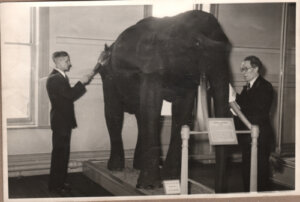
“Here are two curators at the Natural History Museum at Buile Hill dusting one of the exhibits. We still like to keep our objects well dusted at Ordsall Hall and Salford Museum & Art Gallery but they are not quite as large or exotic!” Dave, Salford Museum & Art Gallery
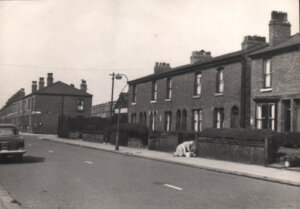
“If you look closely, you can see a woman kneeling on the pavement scrubbing her steps. When they demolished Salford they broke the continuity of how people lived and looked after each other and the community. This photo for me sums up how people looked after our city before we were disinherited by the demolition and our community networks were destroyed.
I remember women using red stones on their doorsteps and constantly washing the windows in their battle against the soot and grime. People were very house proud when I was a child and were invested in looking after their council houses. It was the privately owned housing stock that wasn’t maintained by the landlords that were slums.” Sam Kelly, Salford Victoria Theatre Trust Chair
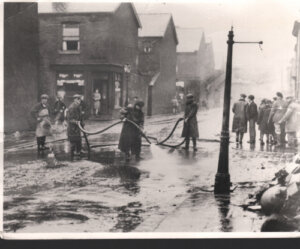
“The reason I’ve chosen this is because I always remember my nana Mrs Joyce Corris a near lifelong resident of Lower Broughton who was born in 1933. My nana spoke of how when this flood happened she was told to hang out of the window and warn people passing not to fall down the steps to the cellar as the water was that high people couldn’t see there was no path there. She always laughed when she told me but it must have been a frightening time for everyone it was so bad. I think this is a great picture depicting this and the clear up after showing a strong community coming together in times of a crisis. I myself was born in Salford and am a Salford resident born in 1973. I hope people enjoy looking at this part of Salford history so closely relatable to my own family.” Miss Bonnie J Corris
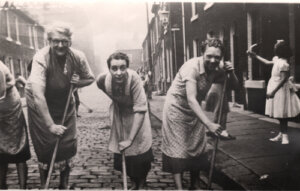
Chosen by Duncan McCormick, Salford Local History Library
Chosen by Duncan McCormick, Salford Local History Library
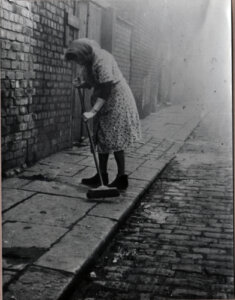
“I remember my gran wearing a coverall and scarf like the woman in the photo when she was doing her cleaning, to keep her hair and clothes clean. Most women did in those days.” Sam Kelly,tust Salford Victoria Theatre Trust Chair
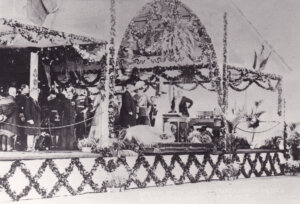
“This photograph shows King Edward VII (with Queen Alexandra) opening the new King’s Dock (also known as Number 9 Dock) during a visit to Salford in July 1905. I like this photo because if you look carefully, to the right of the king and queen, on a cushion on a table, you can see the electric switch that the king used to open the dock, and this switch was recently donated to Salford Museum.” Peter Turner, Salford Local History Library
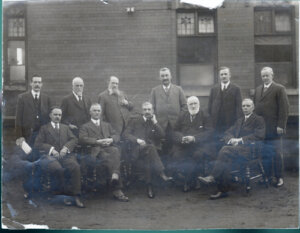
“These Irlam and Cadishead Military Service Tribunal officials look powerful, prosperous, and influential for their time – and indeed they were. The Tribunal was formed mostly from local business owners and councillors whose job it was to agree which men could be exempted from conscription during the 1st World War. At the time, most men aged between 18 and 41 were required to join the armed services. The Tribunal would decide which men could remain in Irlam and Cadishead. One reason to stay, was to continue working in essential jobs- many of which were at Irlam farms and local industries. It is estimated that 137 Irlam and Cadishead men were killed during World War 1.” Eric Lowndes, Swinton Writers Group
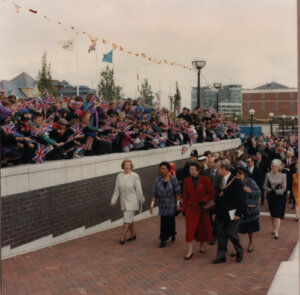
“I chose this photograph because it captures the Quays mid-transformation. A century earlier Queen Victoria opened the Manchester Ship Canal, heralding Salford’s industrial story. But by 1982 the docks were silent. This royal visit feels like a moment from a fairytale: a princess arriving as the landscape begins to transform and I am also part of that story. I designed a public garden for a site within the photograph, inspired by “The Ugly Duckling”, a tale about unexpected beauty emerging through time. Urban regeneration reminds me of that. The Quays, previously defined by industry and neglect, have evolved into thriving Mediacity. This image reminds us that landscapes, like swans, can with time and care, change and flourish.” Kate Henderson
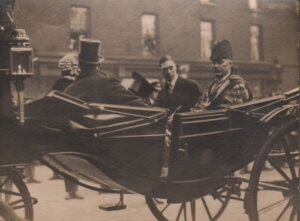
“The reason for me choosing this picture is because I love the way that the mayor (WH Barrett) is looking at the camera person in a stern and almost confrontational way and how the Duke of York is looking at him. It is a great shot taken with timing precision to capture a moment in history.
The Duke of York, later King George VI, seen in this photograph has an interesting story of how he came to the throne. His older brother Edward VIII was a very controversial monarch due to his abdication over the scandal of wanting to marry a divorced woman – Wallace Simpson. He chose love over position which in itself is very romantic, though ensued radical change that effected the royal family even to this day.
I’ve read Wallace Simpsons diary which was a fantastic read and really gave you a glimpse into how things were between them, and how all that came about, as well as an insight into the era, fashion, public opinions, even how life was for a woman of that standing.
A brilliant picture of a royal visit which as you can see from other pictures was, for a lot of Salford people a joyous occasion and great thing to celebrate and way of bringing the community together for a happy, fun day and a memorable time for everyone, which is always a great thing!” Bonnie Corris
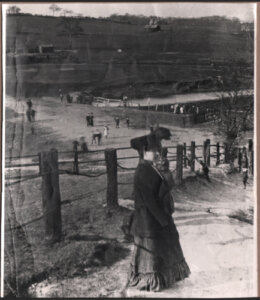
“Taken in 1901, this lovely photograph of Kersal Moor captures a quiet moment in the countryside, with people gathered across the fields and a woman standing proudly in the foreground. Anyone who enjoys the Victorian era would appreciate how real and personal the scene feels. The old clothing, open landscape, and blur of everyday activity give a genuine glimpse into life at the turn of the century, helping the image come alive. It’s easy to imagine how different, yet familiar, life was back then. The scene has a warm, nostalgic feeling that makes Victorian history feel close and human rather than distant or formal.” Hana Sharkey, Ordsall Hall
“I have developed an interest in researching the history of the Mayoralty of Salford, as well as the civic leadership of its former constituent borough and urban district councils – their Mayors and Chairmen.
Whilst Salford first became a City in 1926, following the Local Government Reform Act (1972), the new enlarged Borough of Salford was again granted a City Charter in 1974.
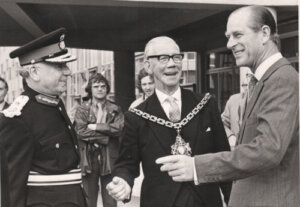
This photograph shows the First Mayor of that new Salford, Harold Singleton, a former Mayor of Swinton and Pendlebury, with the First Lord Lieutenant of newly formed Metropolitan County of Greater Manchester, Sir William Downward and Prince Philip, The Duke of Edinburgh who was himself already the First Chancellor of the University of Salford, each representing the Monarch.” Paul Sherlock, Swinton and Irwell Valley Local History Society
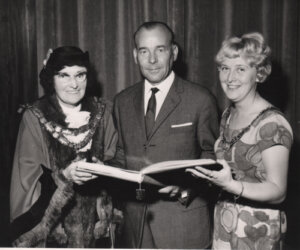
“As well as 2026 being the 100th Anniversary of Salford gaining its status as a city, it is the 60th Anniversary of two of its Town Twinnings, for on 25th March 1966 Swinton and Pendlebury twinned with Lünen and on 15th May 1966 Salford twinned with Clermont-Ferrand. This picture, taken on a prior visit of a party of Lünen’s Miners to Swinton, shows the Mayor of Swinton and Pendlebury (1964 – 1965), Mrs. Evelyn Lynch, together with her daughter Theresa, the Mayoress, in the Town Hall receiving Heinrich Czerwinski, Lünen’s Oberbürgermeister (1963 – 1969).” Paul Sherlock, Swinton and Irwell Valley Local History Society
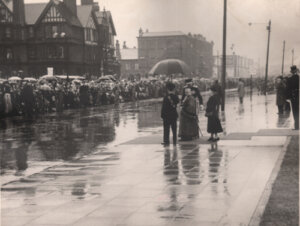
“This is a photograph of the Mayor and Mayoress waiting in the rain on the Crescent in Salford to welcome the Royal Party. The building with the black and white decoration is Jubilee House, opened in 1902 as a home for district nurses. And was built to celebrate the Diamond Jubilee of Queen Victoria. Since 1987 due to our founders Ruth and Eddie Frow it is now the proud home of The Working Class Movement Library. The library is a fascinating place to visit, has changing exhibitions (this year’s starting in May 2026 commemorating the General Strike of 1926), tours of the building, and 40,000 books to choose from to read in the beautiful reading room which was once the dining room of the district nurses. I would love Jubilee House to be involved in the Salford 100 exhibition to showcase what a unique and fantastic place it is!” Julie Kay, Proud Salfordian and volunteer at the library
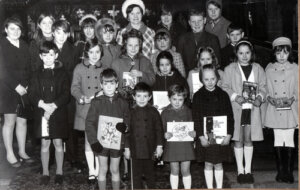
“This photograph makes me smile. It’s a memory of a happy childhood and receiving my prize, along with my friends, for attending Sunday school. I later became a Sunday school teacher and look back, with great affection, at the role the Eccles Parish Church played in my life, and the lifelong friends I made there. A couple of which are in this photograph!” Denise Ellis
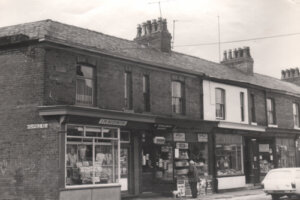
“I have fond memories of my Gran taking me shopping here through childhood. I remember the characters and distinctive smells of their shops.
Irene’s wool shop and Elsie’s hardware shop – Aladdin’s cave. Mr Metcalfe the chemist, Fred the butcher and Mrs Bark the dressmaker.
Mrs Vause, at the corner shop, sliced your bacon to the exact thickness you wanted on her famous red slicer and amazingly, still had all her fingers. She was a sceptic, insisting that men had not walked on the Moon, “ It was all a set up!” Having stayed up all night, watching the Moon landing, I was pretty disappointed at that.” Melanie Bainbridge (Edwards Family – lived on Sutton Flats)
(Image credit M. Bailey)
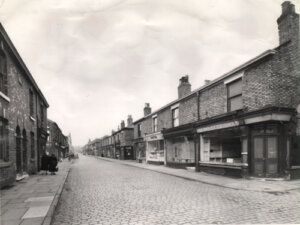
“As a southerner (living up here longer than I did down there) this evokes everything that I understood about northern housing and life. What I love about this is the corner shop, which I also remember down south, the cobbles and literally no cars. It is an age that has passed but even at 60 I remember this down south.” Paul Sutcliffe
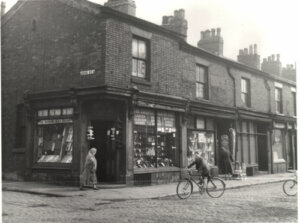
“This corner shop is not the stereotypical ‘Aladdin’s Cave’. This shop sold ladies’ ‘fashion’ shoes. The front window is crammed with shoes, but a woman who appears to be wearing a shawl is hurrying past. A woman with a pram has stopped to browse in the next shop window. There is a boy on bike, another cyclist nearby, but no cars on the cobbled street.
The shops and terraced rows are late Victorian. The photo was taken in 1960. By then the tightly packed houses, described by Walter Greenwood in ‘Love on the Dole’, were deemed uninhabitable, but not by everyone. Many mourned the loss of community when the area was cleared and towers blocks replaced the tiny homes.” Sue Vaughan, Salford Local History Society
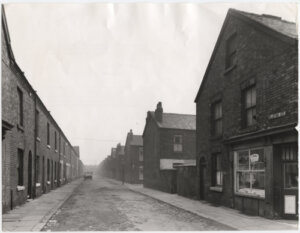
“Parents lived at 14 Slater St part of their married life in old terraced house. Remember Slater St being two very long rows of houses. Aunt lived here as well during her wedded life. Slater St end that was close to Fitzwarren St = Moores bakery. Was rehoused at Little Hulton when demolition of terraced houses began.” Lucy Salisbury
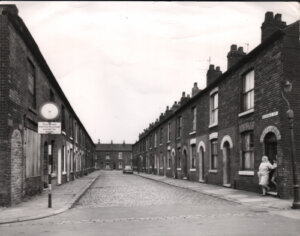
“I love the quiet street with the unexpectedness of the women leaving their home in the corner of the image all dressed up ready to go somewhere. There’s only one car on the street, no one else seen, and the house across the street has a window boarded up but the women are fashionable, hair done, going about their day. This reminds me of the power of going out with your female friends, no matter the occasion, that even in an image when it seems quiet and alone, you still have each other and the day ahead.” Taylor Mitchell
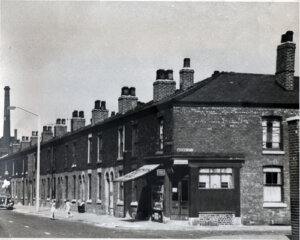
“I selected this photo of Ordsall corner shop. Nothing is more typical as a street of brick houses and a corner shop. The black and white makes it magical. Very artistic picture. No people and no cars without the use of filters. Great rule of third.” Tiziana Albergo
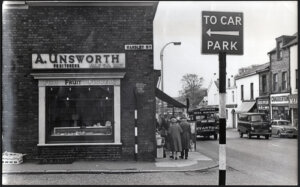
“I picked this picture as a look back into the past of the area I am from and the shops no longer being around. The idea of a fruit shop is novel these days.” Olivia Williams, Swinton resident
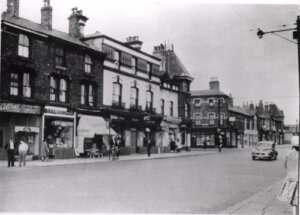
“The shop where the two men are standing is Allans Furniture Store, the shop next door I’m unsure about then the next shop was Hodkins Toy Shop. The bus stop outside was where the 71 and the 84 buses stopped. The 71 went from the Docks to Broughton Bridge and the 84 went from King Street Manchester to Tenax Road in Trafford Park, it was also known as the Metros Special.
Next to Hodkins is The Buck Hotel followed by Davis’s Newsagents and then Fred Oddie the Butchers. The road going from left to right is Liverpool Street, and on the opposite corner to the butchers is Jno Jones Chemist. No one knew what the Jno stood for as the owner was called Reginald and his son was Peter, their assistant was called May and could be seen each night in the London and North Weston Hotel or the Nor West each night with a milk stout.
Next to the chemist was Harolds’s Grocers store followed by George Glass clothing retailers Paxmans Optician, Cains Butchers, Stones furniture repairs, Delves Off Licence, and Heywoods Pawn Shop, next was Clarendon Road. Cains Butchers became Clarks Butchers when Tommy Cain retired and left the shop to his then assistant Tommy Clarke.” Steve Jones
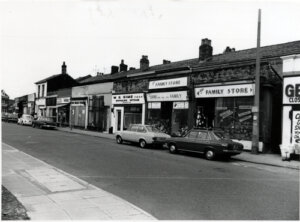
“Back in the day when local shops were the key. You could get what you needed breakfast, dinner and tea. Lower Broughton Road shops for those with a discerning Salford drawl, Open for shoppers come spring, summer or fall. The Poets Corner and Royal Archer stood proudly on the corner of Hough Lane, Where the beer and the ‘craic’ was the name of the game. Bob Blacks the barber was on the far end of this row, When in need of a trim this was the only place to go. ‘Wee Gem Pets’ our family pet store was next to ‘Roberts’ wool shop, Selling rabbits, cats and parrots, including things that could hop. Opposite was ‘Westons’, ‘McKevilies’ and infamous Terrys milk bar, Where for his famous ‘hot Vimto’ kids would travel from afar.” Garry Rogers, Old Salfordian
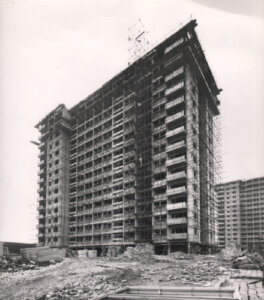
“This photograph is of Arthur Millwood Court being built, where I lived with my then boyfriend, between 1995 and 1999. One year, some local kids used mattresses to make a fort on the waste ground in front of the building and were lobbing potatoes at each other.” Victoria Howarth, Salford Museums & Galleries
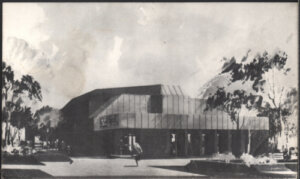
“This is Salford Arts Theatre officially opened 6th September 1976 – celebrating its 50th birthday this year! The theatre opened as The Salford Players Theatre and was associated with actors such as Robert Powell, Sir Ben Kingsley, Albert Finney and Christopher Eccleston to name a few! To celebrate its 50th anniversary there will be a production of Landscape with Chimneys, written by Ewan MacColl in 1949 – where the song Dirty Old Town came from. The theatre is now owned and run by Roni and Scott who have been there for many years and is the hub of the community.
It has numerous activities going on including Crafts Made by You a community craft group run by and for the local people. There are also creative writing groups where participants can get involved in writing and/or performing. It’s a great place, run by lovely people, lots of events coming up to celebrate its 50th birthday, keep your eyes peeled and support a local theatre – let’s help it to celebrate a hundred years!” Julie Kay, proud Salfordian and volunteer at the library
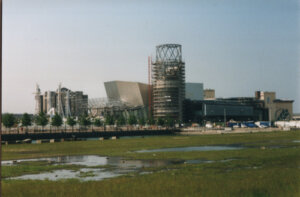
“My first museum/gallery job was at the Lowry in Salford Quays, working with the Front of House team in the galleries. Since then I’ve worked in various different museums and galleries across the country, and now, 20 years on, I am back in Salford working as Exhibitions Manager for Salford Museum and Art Gallery and Ordsall Hall.” Claire Corrin, Salford Museums & Galleries
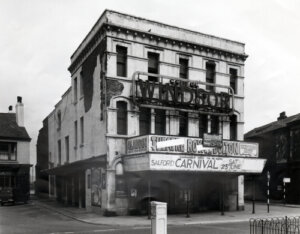
“This photograph of the Windsor Theatre, taken in 1962, captures a meaningful part of Salford’s history and community life. The building stands prominently on the corner, with its bold “WINDSOR” sign and classic architectural details showing its importance at the time. The signage advertising “Salford Carnival” suggests that the theatre was not just a place to watch films, but a central hub for local events, bringing people together and creating a sense of excitement and unity within the area.
Although the street appears quiet in this moment, it is easy to imagine the crowds that would have once filled the space, gathering for entertainment and shared experiences. The theatre symbolises a strong sense of community, where people could escape and connect themselves. Overall, the image celebrates Salford’s cultural identity and highlights how places like the Windsor Theatre played an important role in shaping local life and memories.” Aimen Zubair, A level photography student, Pendleton Sixth Form College
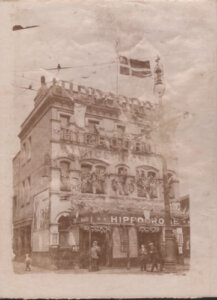
“I love the theatre and have always loved seeing plays on stage. Live shows, laughing, crying, being entertained! This brown sepia photograph of the Hippodrome in 1911 is so nostalgic. The front of the theatre looks very ornate, with its name repeated three times. Twice nightly shows would be unheard of today. I imagine there would be variety shows on here as well as short plays. The men stood outside look well dressed in their suits and there is a small boy walking around the corner. I chose this as theatres like this are long gone but were such a popular form of entertainment.” Hazel Earnshaw
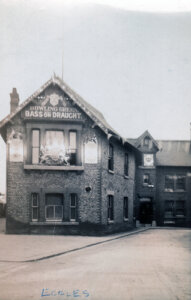
“The Cross Keys has many happy memories for me. My late mother and I would often go for carvery lunch, enjoying an afternoon of gossip and a lovely view of the church. Eccles came alive at the weekend, people meeting at their favourite pub and migrating from pub to pub along Church Street, chatting with friends on the way. Eventually we would end up back at our pub, obviously mine being the Cross Keys. The Cross Keys was also probably responsible for many weddings, including my own, a lot taking place in the Parish Church next door. At one point the landlord held a weekly ‘disco’ at which I had a wonderful hen night with family and friends.” Denise Ellis
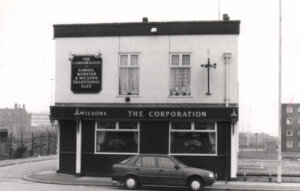
“This photograph captures a moment in time, full of nostalgia and quiet emotion. The Corporation pub stands as more than just a building – it feels like a true community hub where neighbours once gathered, shared stories, and built lasting friendships. The sense of openness in the image reminds me of a time when life felt slower and more connected by these integral meeting points. The car outside, likely from the late 80s, adds to the sense of memory and youth, when Wilson’s beer was regularly drunk on nights out in the Manchester area. Today, many traditional pubs like this are disappearing or changing, losing some of their soul. This image reflects a past where pubs were social anchors, walls held echoes of laughter, stories, and everyday life now softened by the years.” Ella Fletcher, A level photography student, Pendleton Sixth Form College
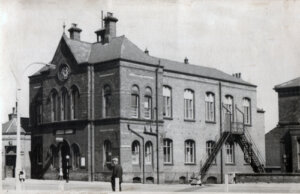
“I have lived in Salford all my life. I have chosen this picture for two reasons. Firstly as Pendlebury library I have fond memories of visiting on a Friday evening in the 1960’s with my father to select books – fiction and non-fiction. This library was closest to us and within walking distance from our home on Rake Lane. Secondly, it was in this building that I joined Manchester Area Wargames Society in 1972 and played many games there during the monthly Sunday meetings. The club also managed the Northern Militaire show at the Lancastrian hall in the 1970’s. I am still a member 54 years later.” Neil Morris, local resident
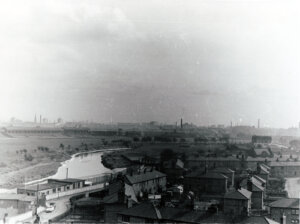
“Top right is the bridge on Littleton Road, Near 4 cobbled streets, one’s 30 Valencia, my childhood abode. The Racecourse Hotel and murky Irwell river with pungent vapours. Charlie Chadwick’s newsagents, where morning and night l delivered papers. Old Manchester Racecourse where many a horse bet took place, Both gambler and bookie wanting different results to the race. Built on the site of the Castle Irwell of old 116 years of horse racing when in 1963, sadly it was sold Off Northallerton road, Lower Kersal Primary School, Where l was told years ago, “you will do nothing you’re a fool”. Great games in the playground including hop skip and jump, Where the grumpy school headteacher was the aptly named Mr Crump.” Garry Rogers, old Salfordian
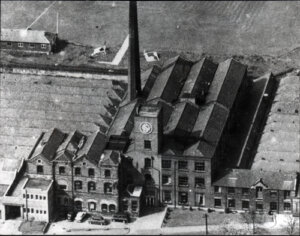
“We chose this photograph because we live in one of the houses built in the 1960’s right next door to where the mill stood. We were also interested to find out that the mill had been sketched by Lowry.” Mandy and Terry Keily
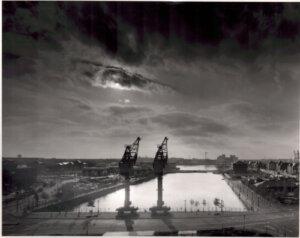
“Great grandfather and grandfather both worked as labourers at Salford Docks. My great grandfather around 1913 and I know my grandfather was still working at the docks as the night watchman at the dock gates in early 1970’s.” Rose
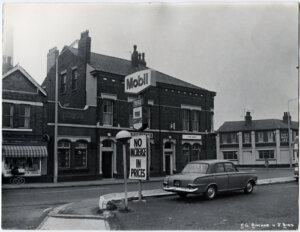
“I used to visit this pub regularly!” Tony Williams, Salford Museum & Art Gallery
(Image credit Mr F.G. Anchor)
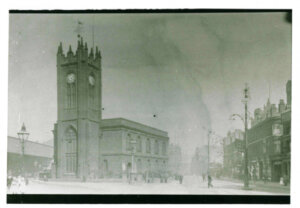
“This is a photograph of Sacred Trinity Church, located on Chapel Street in Salford. Built in 1635, it was Salford’s first parish church, and its bell tower is the city’s oldest surviving structure.
The church functions today with a vision of building friendship and community through love and hope, offering a wide and varied programme. I attend Manchester School of Samba on Wednesdays, where the church explodes with the sound of Brazilian drums. When this photo was taken, it will have been many years before local people will have heard the sound of samba. The genre became more common in the UK from the 1970s, when around 4000 Chileans were granted asylum in Britain.
Attending this group reminds me that worship, joy and connection can take many forms, and the role of a church should never remain stagnant. A building once dedicated to conventional Christianity now provides place for local poets, musicians, artists, and members of the LGBTQ+ community.” Eve Oliver, Salford Libraries
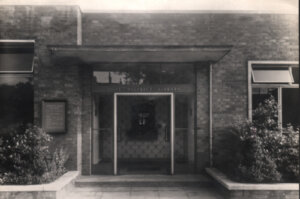
“Me and my two sisters would walk down Lancaster Road with our library cards and take three books each to read that week. Adults to the left, children to the right. Hated having to take our books back and remember my mum would go mad if we forgot because we would be charged an overdue fee… sometimes the librarians would take pity on us and let us off!!” Sue Bainbridge, Ordsall Hall
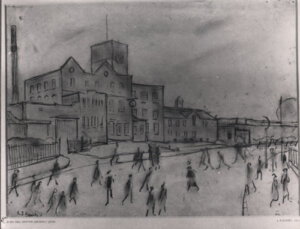
“We chose this photograph because we live in one of the houses built in the 1960’s right next door to where the mill stood. We were also interested to find out that the mill had been sketched by Lowry.” Mandy and Terry Keily
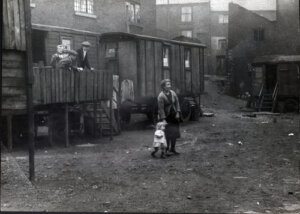
“My choice of image may surprise you. I scanned this photograph and a series of similar images a few years ago. I know nothing of the caravan dwellings and would welcome further information. It also demonstrates the longstanding tradition of welcoming different communities to Salford. The caption on the image is: Title: Caravan Dwellings, Pendlebury. Description: Caravan dwellings, Pendlebury. Men in flat caps: Eddie Barnet & Gossy Barnet. Other man: Tommy Clough. Woman: Mrs Dyson. Girl: Hilda Barnet, daughter of Gossy. 31 & 32 Bold St. Date: 1930s. Please look at the other images, as one shows a “Lowry dog”!” Paul Hassall, Salford Local History Library volunteer
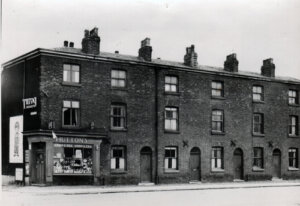
“From April to May 2026, I worked on a collaborative project between CommUNITY Little Hulton and Salford Museum and Art Gallery. Travelling through the area in a ‘Listening Booth’ made from a repurposed van, we explored how the people of Little Hulton have engaged with play and creativity over the years, using old photographs of the area and museum objects to get the conversations started.
People shared memories of playing kerby, bulldog, knock a door run and stuck in the mud, on streets that probably looked like the one in this photograph (albeit a few years later). I also learnt about Little Hulton’s wicked sense of humour and the pride they take in community.
Such stories made me wonder how museums can archive the many abstracted stories that connect to objects through memory, and whether it is the museum’s role. I don’t have an answer yet. What do you think?” Eve Oliver, Community Engagement Facilitator
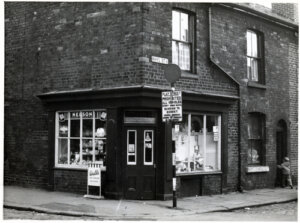
“My nan used to send weekly letters to my mum from Sheffield, each week three twenty pence coins would be carefully sellotaped to the bottom of the letter, one for me and one for each of my two brothers. The twenty pence piece was soon spent in the corner shop, the penny chews didn’t last two minutes in the paper bag they were sold in. If my mum was with us then candy cigarettes and hubba bubba bubble gum was banned, if she wasn’t with us then we took a risk we wouldn’t get found out.” Cath Stanley, A level Photography Teacher, Pendleton Sixth Form College
(Image credit Mr Arthur Morris)
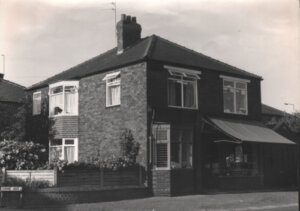
“I was born at home in Orme Avenue in 1968. This is the off licence that was on the corner of our street and owned by the Shepherd Family. It was a hub of the local community and I remember being young popping into the shop with my two sisters for our treats on a Saturday night. They sold TAB cola which was epic and you couldn’t find it anywhere else, it was a real treat. My dad would buy his Newcastle Brown and Theakston’s Old Peculiar on a Sunday when his friends regularly visited in the evening to sit around our dining room table. Bill Shepherd was the local heartthrob and a real character.” Sue Bainbridge, Ordsall Hall
(Image credit Mr J Fallon)
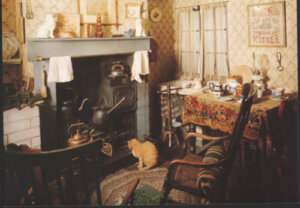
“This is a photograph of the cottage on Lark Hill Place at Salford Museum & Art Gallery. The image shows a stuffed cat by the fire which a lot of our visitors still remember and ask about. Unfortunately, some years ago the cat started to degrade and we had to dispose of it.” Claire Corrin, Salford Museum & Art Gallery
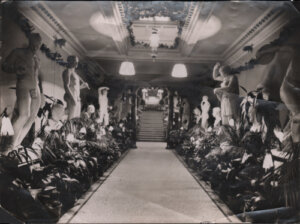
“I’m a member of staff at Salford Museum and love seeing photos of old displays and exhibitions here. This photo is of the sculpture gallery in the 1920s, which was held in the old mansion house where Lark Hill Place now stands! I used to work with a woman called Viv, who would tell me stories of the glamorous Mayoral balls that would be held at the museum in the 80s. I often picture her in a fancy ball gown on the blue stairs which can be seen in the background of this photo. This photo pre-dates those balls but I think it evokes a similar kind of glamour!” Katy Haldenby, Salford Museums & Galleries
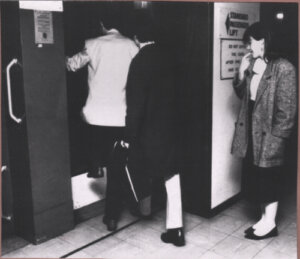
“Paternoster lift in Chemistry Tower was great fun going over the top!” Rose
A Paternoster passenger elevator consists of a chain of open compartments that move slowly in a loop up and down inside a building without stopping. Passengers can step on or off at any floor they like.
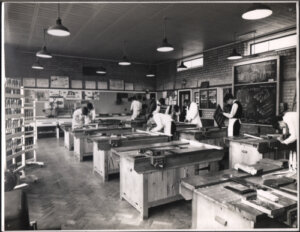
“I attended Hope High School in the early 80’s and I remember dearly making our totem poles in the woodwork class with Mr Dent, the woodwork teacher when I was there. Loved that school and made some lifelong friends. My form room, the metalwork room, was adjacent to this room and Mr Woodhead was our form teacher – not a pleasant bloke.” Sue Bainbridge, Ordsall Hall
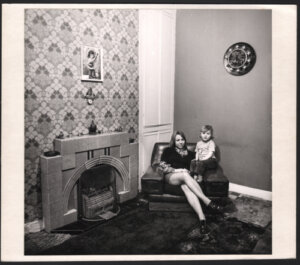
“This image reminded me of a photo of my Father when he was little. The intimate setting of the family living room made me feel as though I were the one taking the photograph, almost stepping back in time. It made me think of my own family’s photographic archive and the importance of family history.” Niamh Lafferty, Salford Museum & Art Gallery
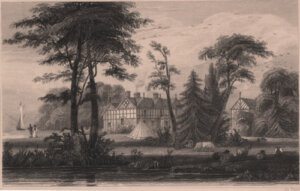
“I have chosen this picture as it depicts Irlam Hall in Irlam. Where the Hall once stood is the site of the annual Irlam and Cadishead Community Festival. In this picture it looks like the occupants of the Hall were having their own festival with a large marquee in the grounds – I wonder if they had ice cream and Punch & Judy there too :)” Cal Bennett
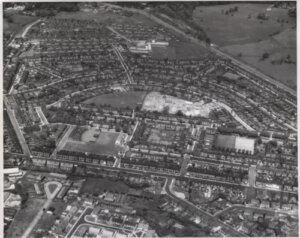
“An aerial view of Westwood Park Estate, named after the former farm next to the Bridgewater Canal. Work on Westwood Park Estate began in 1920 and was completed in 1923, there were around 700 dwellings built. Some of the roads are named after trees. Verdun Road and Cambrai Crescent are named after battles of the First World War, which had finished not long before work on the estate began.
A polished stone Neolithic axe head was found when drains were dug along the new Westwood Crescent. This is between 4,000 and 6,000 years old, possibly the oldest man made object found in the Eccles Borough area. I believe it is now stored at Manchester Museum.
I grew up on Parrin Lane, running across near the bottom of the picture, and went to Westwood Park Nursery and then Westwood Park Primary School. From the primary school I went on to Winton High School. Whilst there I got a job as a ‘Paper Boy’ at Hooper / Williams newsagent on Worsley Road. When I started I did paper rounds on Westwood Park and got to know it very well, including all the little alley ways between the various streets. I would deliver various morning papers before school and copies of the Manchester Evening News after school. When I had proved myself as reliable I was given a round in Worsley, for which I got paid more. The shop was later taken over by Mr and Mrs Sergeant who gave me a very nice reference when I finished school and got a job on the railway. I am always grateful for that.
I had many good friends who lived on the estate, so all in all I have fond memories of Westwood Park.” Mark Charnley
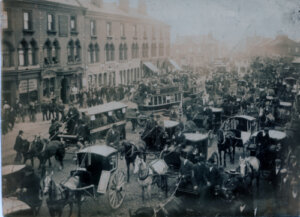
“It is only recently that I realised there was a race course in Salford when my Mum, from New Moston, told me that she travelled past it on her way to Wigan and Bolton when she was younger.
This photo shows its popularity; the hustle and bustle; the excitement of the race day for all to see.
It is interesting to see the different types of carriages, small and large, and you can see the strength of the horses pulling the overcrowded larger carriages – no health and safety there! I used to travel along Trafford Road to work and find it unrecognisable today, so much has changed.” Hazel Earnshaw
“As someone who lives near Trafford Road I found this photograph really interesting. It shows 1800’s Trafford Road as a thoroughfare for racegoers travelling to Manchester Race Course. It’s a chaotic scene with nose to tail horse drawn vehicles on a cobbled road. A scene dominated by men in all their finery! It makes me wonder if horse racing was a purely male dominated spectator sport or are the women travelling in comfort inside the carriages?” Lyn Rigby
“I love the hustle and bustle of this scene with so many horse drawn vehicles filling Trafford Road. I compare this, to how the street looks today. Whilst the type of transport has changed somewhat, the hectic feel is still the same. Many years later, my Dad was involved with the Metrolink system project managing many aspects of its development so I feel nostalgic about this aspect of our history. It is fascinating seeing the comparison between those early ways of transporting people which would have been very uncomfortable compared to the luxury of modern- day travel.” Sarah Eckersley, Ordsall Hall
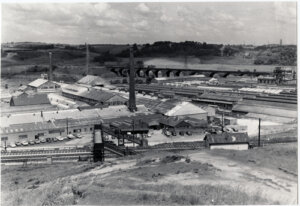
“My reasons for selecting this picture are I have always been very interested in ceramics and when I moved to Salford, I found out this company is based close to where I live. Also one of my relatives and one of my neighbours worked for them. Additionally, the peak period of production was from 1910 to 1930, so they were a key contributor to the Salford economy in 1926. Salford Museum and Art Gallery have most of the factory archives and a rich collection of pottery and tiles. I specifically chose this picture to show how the factory changed over the years.” Dr Yichao Shi, member of Pilkington’s Lancastrian Pottery Society
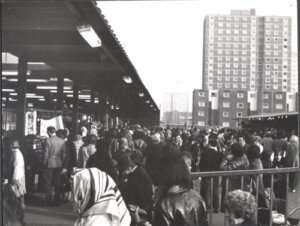
“I have chosen a photograph of Salford Market as it reminds me of my childhood in the 1960’s. I would go with my parents every Saturday when my mother would buy her weekly fruit and vegetables and my father would exchange his paperback books. I would have free time to wander around looking at the different stalls. It was also my first subject matter when I started painting in the 1970’s.” Philip R Westcott, Salford Art Club
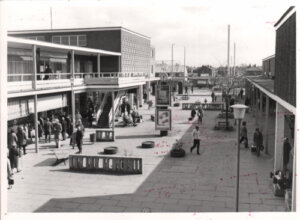
“I used to live opposite Walkden Shopping Centre and I love looking at old photographs of places that I know well. I like to see how places used to look and the changes, or similarities, you can spot.” Natalie, Salford Museum & Art Gallery Cafe
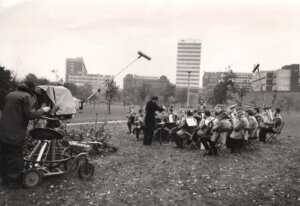
“I was born and brought up in London but came to Salford University via clearing to study Applied Chemistry in 1973. In 1974 I changed courses to Environmental Sciences graduating in 1977.” Rose
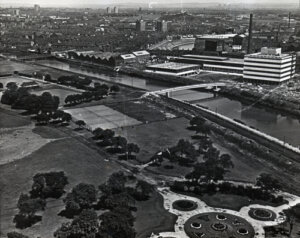
“Civil Engineering Dept (where I studied building tech as part of environmental sciences course) Meadow Rd over the bridge from Peel Park now demolished!” Rose
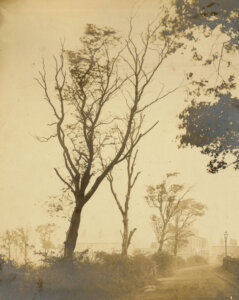
Chosen by Ste Buchanan, Salford Museum & Art Gallery
(Image credit J & R Mudd, Manchester)
In 1845 Peter Spence took out a patent for alum used for water purification, which he had accidentally discovered. He set up Pendleton Alum Works and became the leading manufacturer of alum. In 1857 they faced a lawsuit for emitting toxic waste such as hydrogen sulphide and sulphuric acid. James and Robert Mudd were commissioned to photograph the surrounding areas as evidence, and the tree stripped of its foliage in this image shows the effect it was having on the environment.
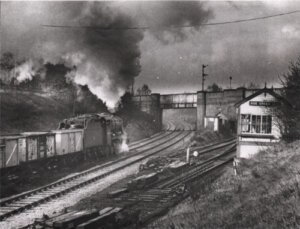
“I have lived in Roe Green all my life and this image brings back childhood memories. I have faint memories as a young child of catching the train at Worsley station, but also of my sleep being disturbed by passing trains. Roe Green Junction was an important one and Sanderson Sidings was nearby. After the closure of the railway the disused line became an excellent playground and now is a well-used walkway.” Paul Hassall, Salford Local History Library volunteer
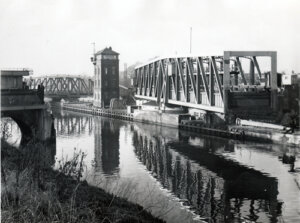
“The ‘unique’ Barton Swing Aqueduct. This image shows the aqueduct whilst it is swinging, Barton Swing Road Bridge can be seen behind it. Although built in the 1890’s this structure was probably at its busiest in the 1950s and is still operational. It is a unique structure that carries the Bridgewater Canal over the Manchester Ship Canal. Known as ‘The Tank’ it weighs 650 tons and holds 800 tons of water, giving a total weight of 1450 tons.
Normally both aqueduct and bridge are closed so that boats on the Bridgewater Canal and road traffic can cross freely. However, when a vessel comes along the Manchester Ship Canal the tank (full of water) is swung first, followed by the road bridge, to allow the ship to pass.
My mother was a bus conductress (clippy) at Frederick Road depot in the late 1950s and early 1960s, She tells me the buses were often stranded, along with all the other traffic, when the bridge and aqueduct were swung. This caused most annoyance when workers were returning home from Trafford Park. The aqueduct also makes an appearance in the 1961 film ‘A taste of honey’ based on a play by Shelagh Delaney set in Salford. There is a small pocket park at Barton between the main road and the Bridgewater Canal where you can go to admire this wonderful and unique piece of engineering. If you are lucky you may just see it swing….” Elizabeth & Mark Charnley
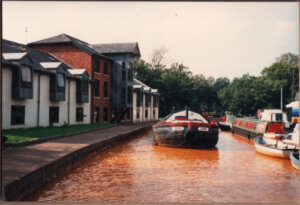
“This image shows a barge on the canal, these working boats were once a common sight. Most boats on the canal today are narrow boats. These were also working boats but today are mainly used for leisure purposes, people enjoying a nice cruise. Some people live on their narrow boats and other people own or hire them for a nice peaceful holiday. The Bridgewater Canal is more relaxing than most canals as there are no locks along its length, only at its extremities where it joins the rest of the canal network.” Mark Charnley
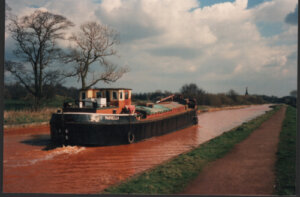
“This is a beautiful image in its own right, and it holds personal memories for me. I moved to Eccles in 1988 to live with Bob, my boyfriend, later husband. We spent a lot of time walking the canal from Monton to Worsley and beyond. As an outsider to the area I had no idea it was so green and attractive. Bob knew every inch of the local landscape: he grew up in Eccles, had worked as a Ranger at Worsley Woods in the mid 1980s, and he was passionate about the natural world. We are so blessed in Eccles to live close to green space and in such a historic area. Long may it be cherished.” Ann Taverner, Digital Salford Volunteer
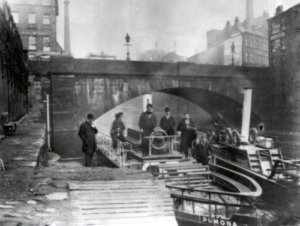
“I have chosen New Bailey Bridge. I worked next this bridge for over 20 years. I knew about the bridge before I worked there through Adolphe Valette’s painting which I love. That bridge has seen some life… Love it🙂” Cal Bennett
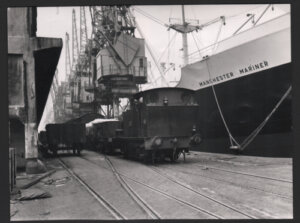
“Great grandfather & grandfather both worked as labourers at Salford Docks. My great grandfather around 1913 and I know my grandfather was still working at the docks as the night watchman at the dock gates in early 1970’s.” Rose
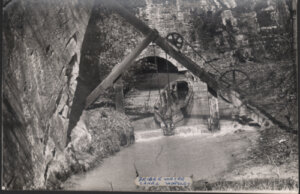
“This reminds me of working class heritage.” John Lee Greg, Salford Museum & Art Gallery
(image credit W. Higham)
Entrance to underground canal – left tunnel. Excellent view showing sluice at work. Sluice created a rise in water level. In order to assist boats to exit the tunnel the sluice was lowered, creating power to push out the boat.
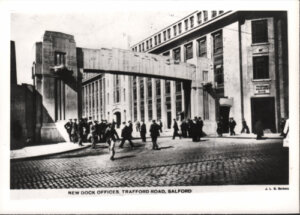
“Great grandfather & grandfather both worked as labourers at Salford Docks. My great grandfather around 1913 and I know my grandfather was still working at the docks as the night watchman at the dock gates in early 1970’s.” Rose
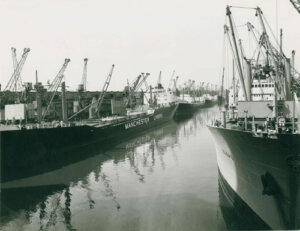
“I served my apprenticeship at Manchester Dry Dock as a ship’s fitter. We used to cruise along the canal, with our tools, on the company launch from the Dry Dock to No 9 Dock, to board the Manchester Liners ships to carry out repairs.” David Williams
(Image credit Elsam, Mann & Cooper Manchester Ltd.)
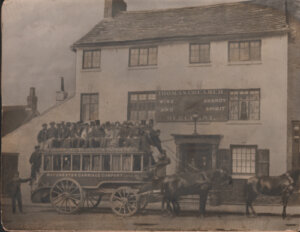
“By the date of this photo, c1870, the omnibus service had grown dramatically from the first horse drawn omnibus of fifty years earlier. As shown on the side of the carriage, the Manchester Carriage Company ran the omnibus, not only in Eccles, but routes throughout Manchester and its suburbs.
The crowded tram stands outside the old building of the Bull’s Head on Church Street. The landlord and landlady are visible in the pub doorway. The horses coats are gleaming and several of the (mainly male) passengers on the top deck are wearing top hats. The scene is obviously posed so was it a special occasion? Those paying an extra penny for an inside seat on the lower deck are hidden from view. They definitely had the safer seats!
At the turn of the century Eccles joined Salford’s plan for an electrified system which meant the end for the horse drawn vehicles in the area.” Sue Vaughan, Salford Local History Society
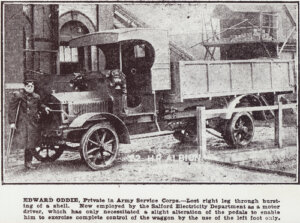
“It shows Edward Oddie, who had lost a leg in the First World War but went on to drive a specially-adapted bus. I chose it because, although there are many sad stories of Salford soldiers who felt neglected after the war, this is a heartening and poignant story of how a local employer made an effort to give this man a second chance in life.” Steve Illingworth, committee member of the Friends of Salford Museum Association
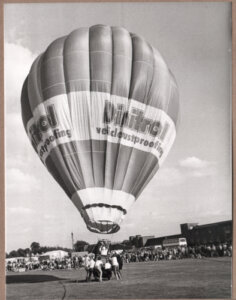
“I’ve chosen a photograph from one of the Salford Shows held on the site of the Salford Grammar school. This event took place every August in the 70’s and 80’s. Starting off as a competition for the local allotments it rapidly grew to be a highly successful event. It is particularly relevant to me as my Father and Mother were involved, with their friends, in running the event. My father even went up in this balloon. Harold Riley was often the judge for the art competition.” Memories of Ken and Alice Westcott
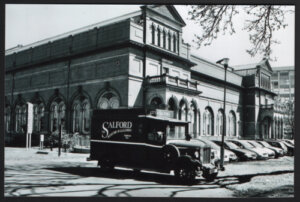
“I remember we were still using the old museum van when I started working at Salford Museum and Art Gallery, nearly 15 years ago! It definitely got some attention when we were driving it around the streets of Salford!” Amy Brunn, Salford Museum & Art Gallery
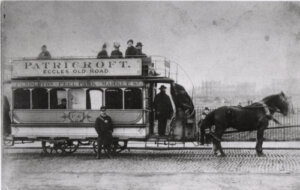
“This photograph reminds me how things change yet remain the same. The Salford Corporation horse drawn tram ran from Patricroft via Eccles Old Road, linking Pendleton, Peel Park and Market Street. Today I can make practically the same journey by 67 or 100 bus. Back then if I sat upstairs I would be exposed to all weathers whereas now I am enclosed in the warm and comfortable Bee Network buses. The horse trams were subsequently replaced by electric trams. I wonder whether any of the old track lies buried under the modern road surface – an echo of times past. I know many cobbles are still there as they are often seen during roadworks or at the bottom of pot-holes.” Jonathan Willson, Salford is my adopted home
Sign up to the Salford Community Leisure mailing list and be the first to find out about our latest news, offers and forthcoming events across our services.